Choosing a virtual staging style that matches the buyer
The point of staging is not to show off a designer’s taste. It is to help a specific buyer imagine their life in a specific home. The right style makes a listing feel obviously “for me” to the people most likely to buy it; the wrong style makes the same rooms feel off, dated or out of budget. This guide explains how to choose among the eight styles available in StageZap and when each one works best.
Start with three questions
- Who is the likely buyer? First‑time buyers, growing families, downsizers, investors and second‑home buyers respond to very different visual cues.
- What does the architecture say? A 1960s ranch, a new‑build condo and a beach cottage each have a natural style. Fighting the architecture rarely works.
- What price point are you in? Staging should look like what a buyer at this price could afford. Over‑luxurious furniture in an entry‑level home creates distrust; budget furniture in a premium home cheapens it.
With those answers, the choice usually narrows to one or two styles.
Modern: the safe default
Modern staging uses clean lines, low‑profile furniture and a neutral palette of white, warm gray and black accents. It works for condos, new construction, flips and any home where you are not sure who will buy. Because it is restrained, it lets windows, ceilings and finishes take the spotlight. If you stage many listings and want one go‑to look, this is it.
Use for: city apartments, new builds, renovated homes, mixed buyer pools. Avoid for: strongly characterful period homes where it can feel cold.
Scandinavian: bright, cozy and space‑enhancing
Scandinavian staging combines light oak, white and soft gray textiles, wool and linen with a few cozy accents. Its biggest practical advantage is light: pale materials bounce light around, which makes small or north‑facing rooms look larger and brighter in photos. It appeals strongly to first‑time buyers and young families.
Use for: starter homes, small apartments, darker rooms. Avoid for: luxury listings where it may read as too simple.
Luxury: for homes where buyers expect it
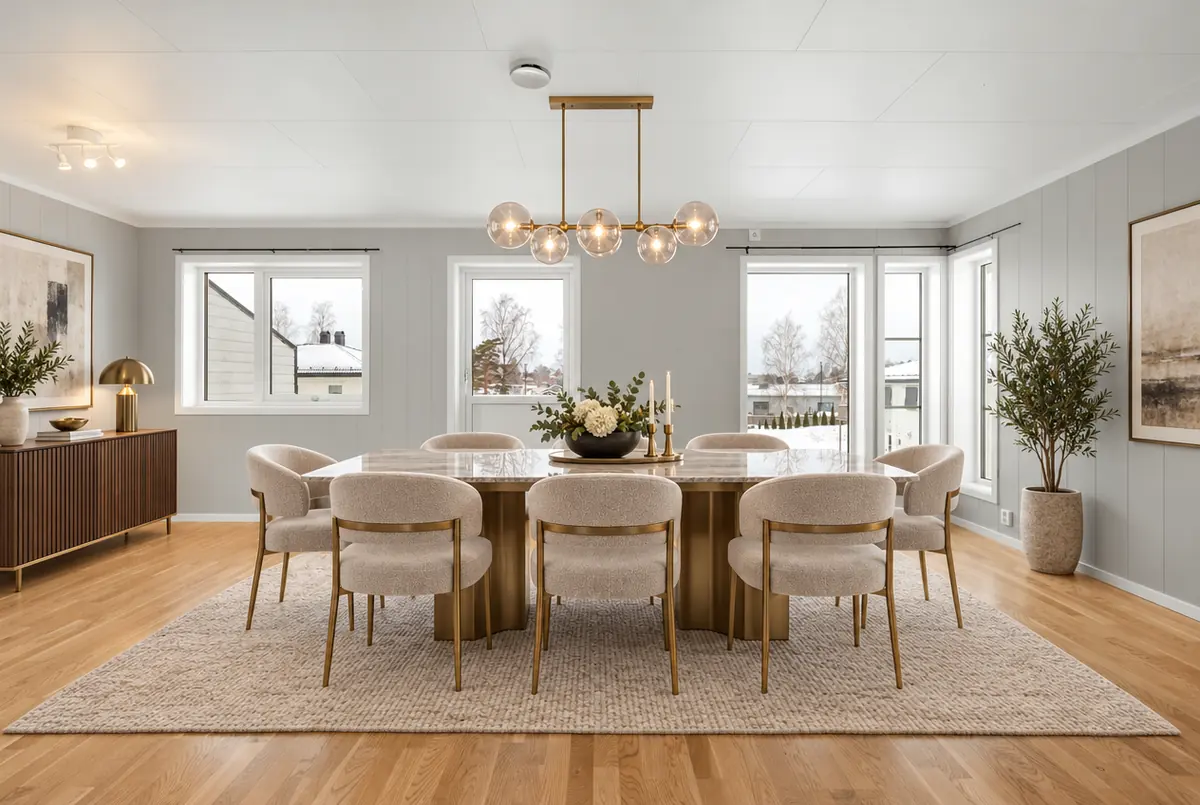
Luxury staging adds velvet and bouclé upholstery, marble and brass accents, designer lighting and a rich neutral palette. In a high‑end home it confirms the price; in a modest one it creates a mismatch the buyer will feel at the showing. Use it when finishes already justify it — high ceilings, stone, large windows. Our realtor page shows a luxury dining room example.
Farmhouse: warm, family‑friendly suburban appeal
Modern farmhouse uses reclaimed wood, cream and sage textiles, black metal accents and woven baskets. It fits suburban and rural homes, newer builds with farmhouse details and family buyers who value warmth over minimalism.
Industrial: lofts and conversions
Industrial staging pairs leather, dark metal, raw wood and Edison lamps in a charcoal and cognac palette. It is the natural choice for lofts, warehouse conversions and apartments with exposed brick, concrete or ducts. In a standard suburban home it tends to feel heavy.
Japandi: calm and design‑literate
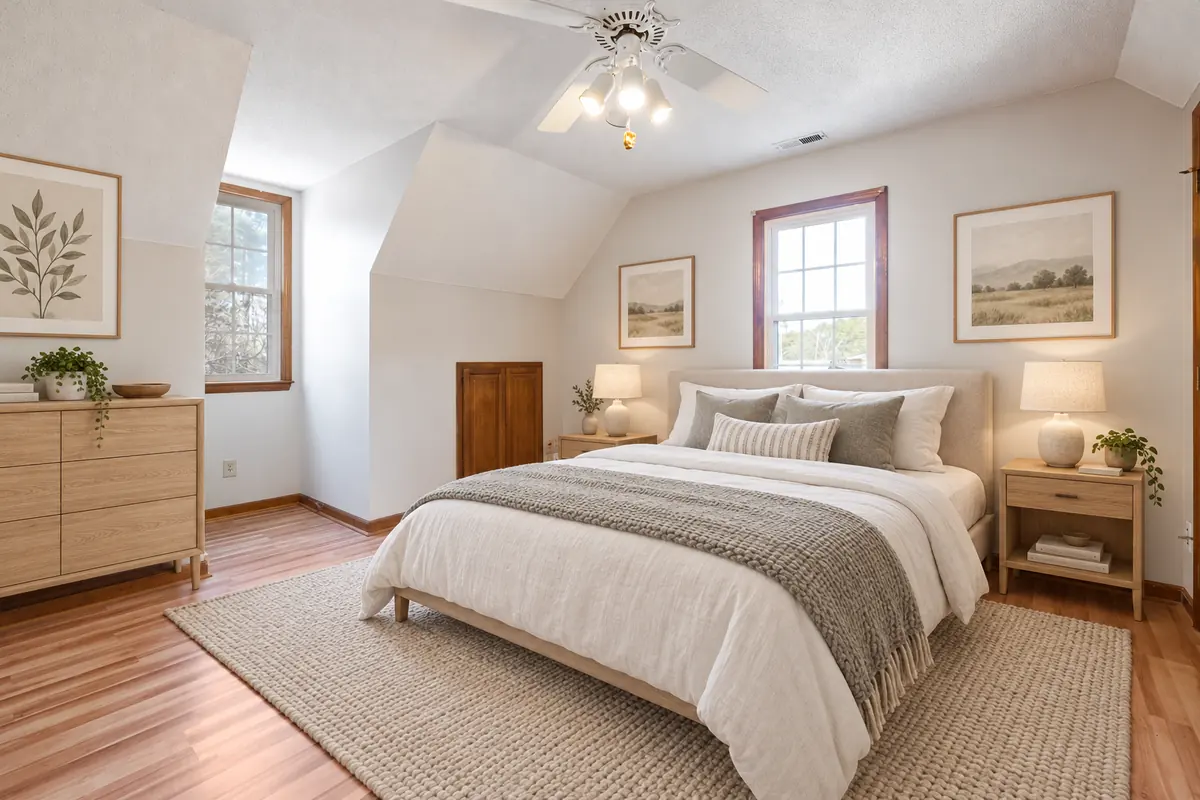
Japandi mixes Japanese minimalism with Scandinavian function: low natural‑wood furniture, muted earth tones, paper lamps, linen and ceramics. It photographs beautifully in bedrooms (see our bedroom staging example) and appeals to urban professionals and design‑conscious buyers. It is also excellent for small rooms because the furniture sits low.
Mid‑Century Modern: character with mass appeal
Walnut wood, tapered legs and mustard or teal accents bring instant personality. Mid‑Century suits homes actually built in the 1950s–70s, as well as apartments targeting younger buyers who like a bit of color. It is the most “opinionated” of the mainstream styles, so use it when the architecture supports it. Our empty room furniture page shows a mid‑century living room.
Coastal: light, breezy and vacation‑ready
Coastal uses white and sand tones, soft blue accents, rattan and linen slipcovers. It is the obvious fit for beach and lake markets and works well for vacation rentals; see our Airbnb listing photos page for an example.
A quick decision table
- New‑build condo, unknown buyer: Modern.
- Small starter home, darker rooms: Scandinavian.
- Premium home with stone and high ceilings: Luxury.
- Suburban family home: Farmhouse or Modern.
- Loft or conversion: Industrial.
- Urban apartment, design‑minded buyers: Japandi or Mid‑Century.
- Beach, lake, holiday rental: Coastal.
Matching style to each room type
Some styles shine in particular rooms. In living rooms, Modern and Scandinavian give the broadest appeal because the sofa, rug and coffee table stay visually light, leaving the floor visible. In bedrooms, Japandi and Scandinavian create the calm, restful mood buyers look for, and the low beds make small rooms feel larger. In dining rooms, Luxury is unusually effective: a statement table and pendant lighting create an aspirational “entertaining” shot that is hard to achieve with other styles. In kitchens, the style matters less because staging is limited to stools, bowls and accessories — pick whatever matches the rest of the listing. Home offices benefit from Modern or Industrial, which read as focused and functional.
What not to do
- Don’t chase trends for their own sake. A very fashionable look can date a listing quickly if it sits on the market.
- Don’t stage to your own taste. You are not the buyer.
- Don’t ignore the seller’s finishes. Warm wood floors pair badly with cold industrial furniture; cool gray tile pairs badly with rustic farmhouse.
- Don’t overfill. Whatever the style, fewer, well‑placed pieces always look more expensive than a crowded room.
Consistency beats perfection
Whatever you choose, use one style for the entire listing. Buyers move through a gallery as if walking through the home; a sudden style change breaks the illusion and makes staging obvious. Keep color accents consistent too: if the living room has navy pillows, a navy throw in the bedroom ties the set together. You can type accents into the “Extra wishes” field to control this.
Test before you commit
Because AI staging takes about a minute per room, you do not have to guess. Stage the hero room in two candidate styles and compare them side by side, or show both to the seller. Choose the one that best fits the buyer profile and roll it out across the listing. You can try every style free on your own photos, and read our step‑by‑step staging guide for the rest of the workflow.
Styles and photography
A final practical note: style interacts with light. In dim photos, dark styles like Industrial can turn murky, while Scandinavian and Coastal lift the image. In very bright, high‑contrast rooms, Luxury and Mid‑Century add welcome depth. If your input photo is less than ideal, lean towards lighter styles — or better, reshoot following our empty room photography tips.
Ready to see your own photo transformed?
Upload one photo. No sign‑up needed for the free demo.
Try it free in the studio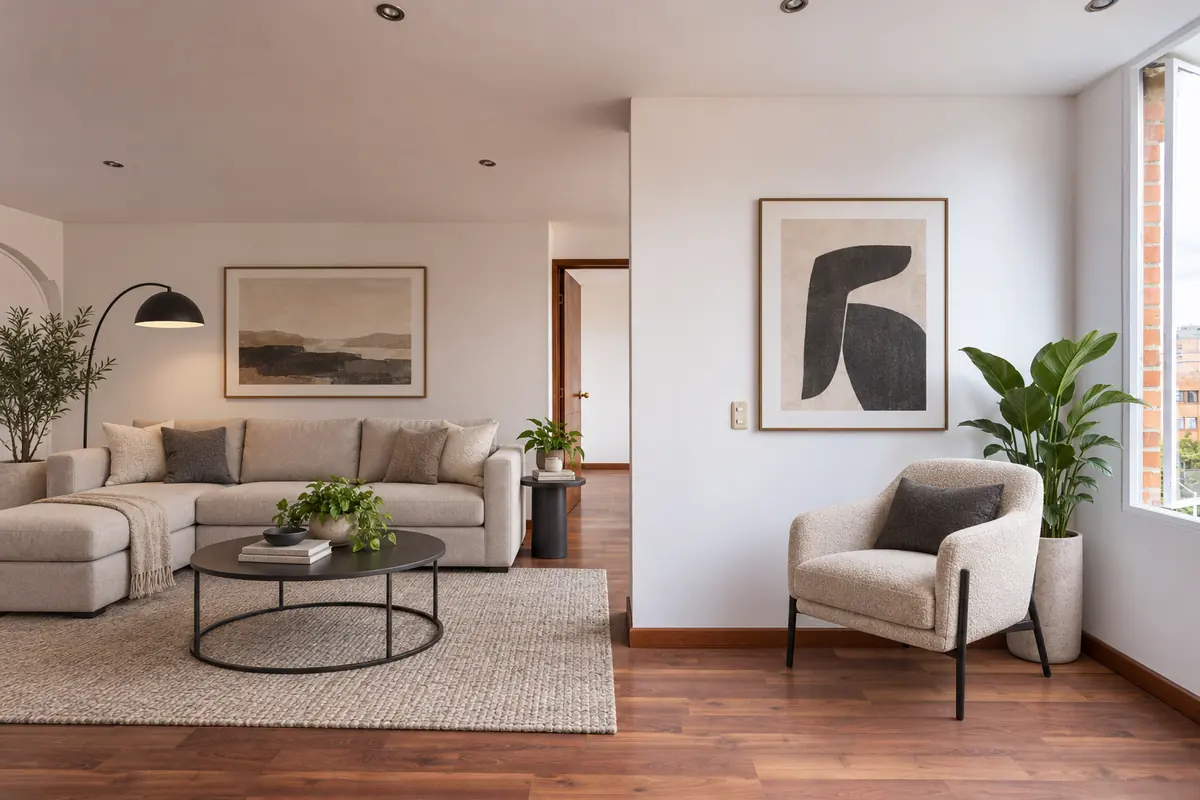 How to virtually stage a listing, step by step
 Virtual staging disclosure: how to stay honest and compliant