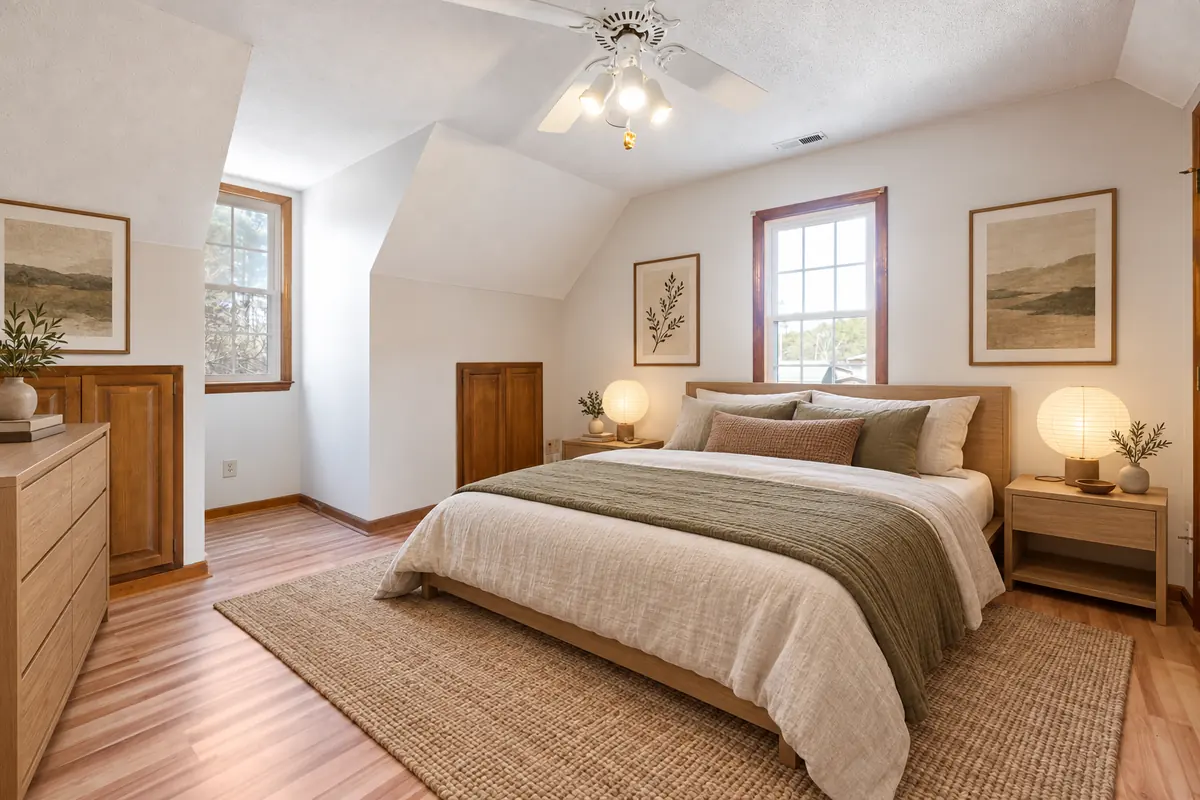
Small rooms are where staging helps most and where it can go wrong fastest. Empty, a small bedroom looks like a box; over-furnished, it looks cramped — and if the staging shows furniture that could never fit, buyers feel misled at the showing. These nine techniques make compact rooms read as spacious and usable while staying honest.
1. Shoot from the doorway corner
Stand in the corner beside the door and shoot towards the opposite corner. This shows the longest diagonal and two walls, which gives the clearest sense of depth. Keep the camera level at chest height so vertical lines do not converge. More on capture in how to photograph empty rooms.
2. Do not go ultra-wide
Ultra-wide lenses make small rooms look bigger in the photo and then disappointing in person. They also stretch furniture at the edges. Use the phone’s normal 1× lens or around 16–20 mm full-frame equivalent on a camera.
3. Show real-sized furniture
A double bed in a small bedroom tells buyers it fits; a king bed that would block the door tells them nothing useful. Set the room type correctly so the AI scales pieces to the space, and if you know the dimensions, ask for them — “a double bed and one bedside table”.
4. Fewer, lower pieces
Low furniture keeps sightlines to the windows open. Low platform beds, slim-armed sofas and legged furniture that shows floor underneath make rooms feel larger. Japandi and Scandinavian styles do this naturally.
5. Light colors, one accent
Pale upholstery and rugs reflect light; dark, heavy pieces absorb it. Keep the palette light and allow one accent color in cushions or art. Avoid Industrial or heavy Luxury styles in very small rooms.
6. Keep the floor visible
Visible floor is the strongest visual cue of space. A rug that leaves a border of floor around it, and furniture that does not touch every wall, both help. If a result looks crowded, regenerate with “fewer pieces, more open floor”.
7. Give the room a clear purpose
Small spare rooms are often skipped because buyers cannot tell what they are for. Staging one as a home office or nursery answers that question. Use a single purpose per room — a desk plus a bed in a tiny room says “compromise”.
8. Mirrors and art, sparingly
A large mirror or a single piece of art at eye level adds depth. Gallery walls and many accessories add clutter. Remember that staged mirrors should not reflect things that are not there.
9. Check honesty at full size
Zoom in and confirm: doors can still open, walkways are realistic, windows and radiators are unchanged, and nothing extends through a wall. Label the photo as virtually staged and keep the empty original. Our disclosure guide covers the rules.
Try it
Upload a small room to the bedroom staging page or start from AI virtual staging and compare two styles side by side.
Ready to see your own photo transformed?
Upload one photo. No sign‑up needed for the free demo.
Try it free in the studio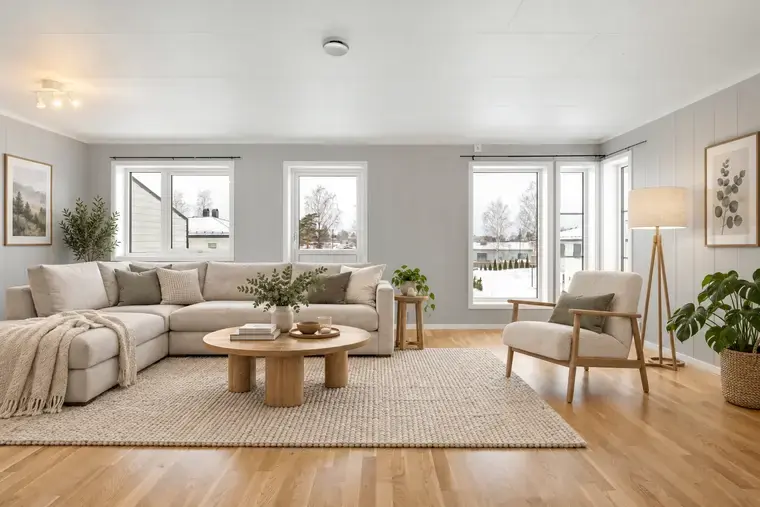 Virtual staging vs traditional staging
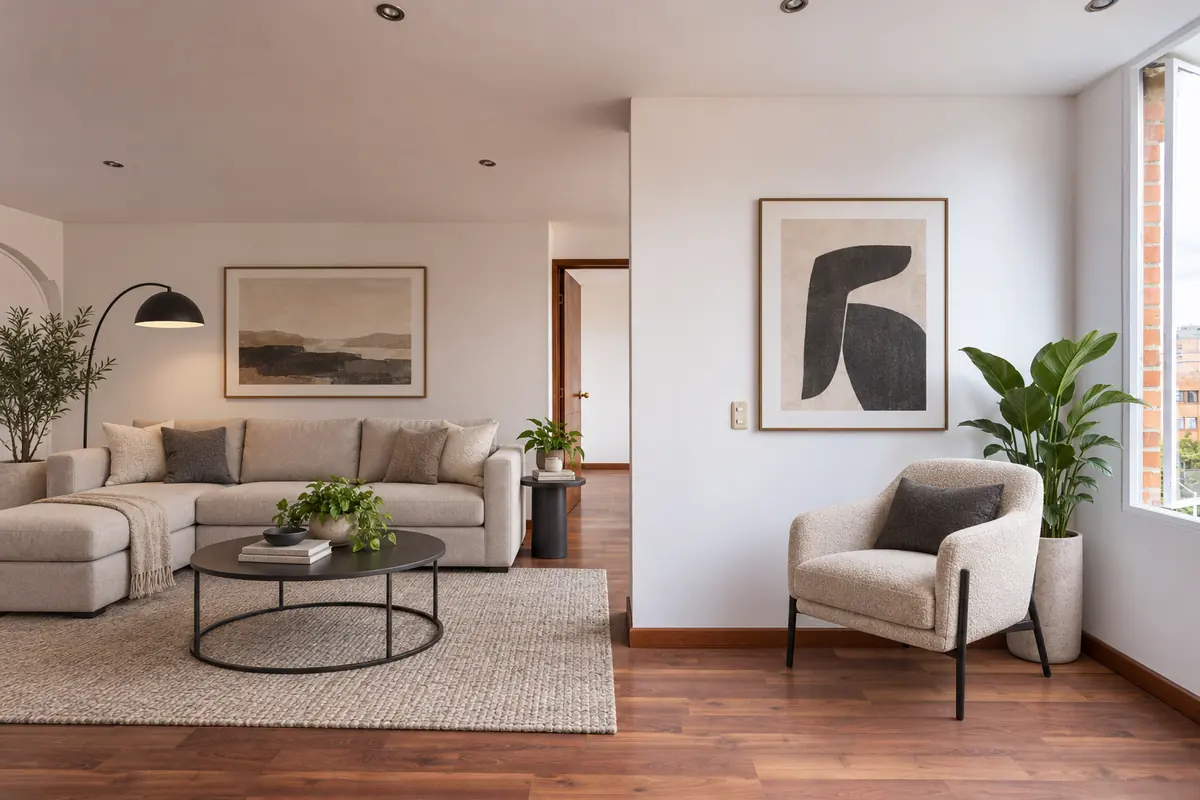 How to virtually stage a listing, step by step