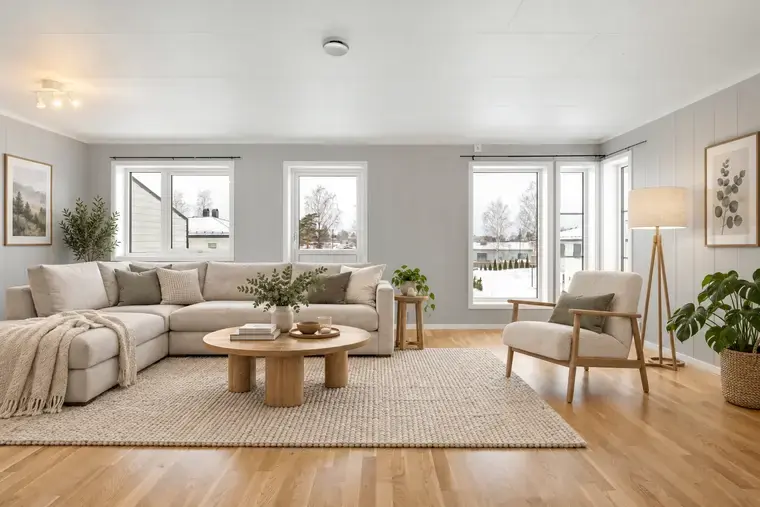
Staging helps buyers picture themselves in a home. The question for most sellers and agents is not whether to stage, but how: rent real furniture and have it installed, or add furniture digitally to the listing photos. Both work. They just solve different problems. This guide compares them on the points that actually decide the choice.
What each one is
Traditional staging means a stager brings in furniture, art and accessories, arranges them in the home, and removes them after the sale. Buyers see the furnished home online and in person.
Virtual staging adds furniture to photographs of the empty rooms. Buyers see furnished rooms online and an empty home at the showing. With AI virtual staging this takes about a minute per photo instead of days.
Cost structure
Traditional staging is typically priced per home, with an installation fee plus monthly furniture rental for as long as the property is listed — so a slow market costs more. Virtual staging is priced per image or as a subscription and is a one-off cost regardless of how long the listing stays up. Prices vary widely by market and provider, so get quotes for your area rather than relying on national averages.
Speed
Physical staging needs scheduling, delivery and installation, often a week or more before photos can be taken. Virtual staging can be done the same day as the photo shoot; AI tools return images in minutes, so you can stage, compare styles and publish in one afternoon.
Buyer experience
- Online: both look furnished. Well-done virtual staging is hard to distinguish in a listing gallery.
- In person: traditional staging wins. Buyers walking through a furnished home experience scale and flow directly. With virtual staging they see an empty home, so the photos must not oversell — the walls, windows and floor must match what they see.
Risk and honesty
Virtual staging carries a specific risk: images that change the property (moving windows, hiding damage, changing floors) mislead buyers and can break MLS or advertising rules. Choose tools that keep structure intact, label every staged photo and keep the empty original in the gallery. Our disclosure rules guide covers the details.
Flexibility
Virtual staging lets you show the same room in several styles — a bedroom as a nursery or an office, a living room in Scandinavian for first-time buyers and Luxury for a premium audience. Physical staging commits you to one look.
When each wins
- Choose traditional staging for high-value homes where in-person impressions decide the sale, occupied homes that need decluttering and rearranging, or open houses that rely on the furnished experience.
- Choose virtual staging for vacant homes, tight budgets, quick listings, rentals, new builds or off-plan sales, and rooms that are hard to furnish physically.
The hybrid approach
Many agents physically stage the two or three rooms that matter most in person — usually the living room and primary bedroom — and virtually stage secondary rooms such as a spare bedroom or office. Another common pattern is to start with virtual staging, and only invest in physical staging if the listing has not attracted enough showings after a few weeks.
Getting virtual staging right
- Photograph empty rooms well — see how to photograph empty rooms.
- Pick a style that matches the buyer and the architecture — see choosing a staging style.
- Check every output at full size before publishing.
- Label staged images and keep the originals.
You can try it on your own rooms with the free virtual staging demo.
Ready to see your own photo transformed?
Upload one photo. No sign‑up needed for the free demo.
Try it free in the studio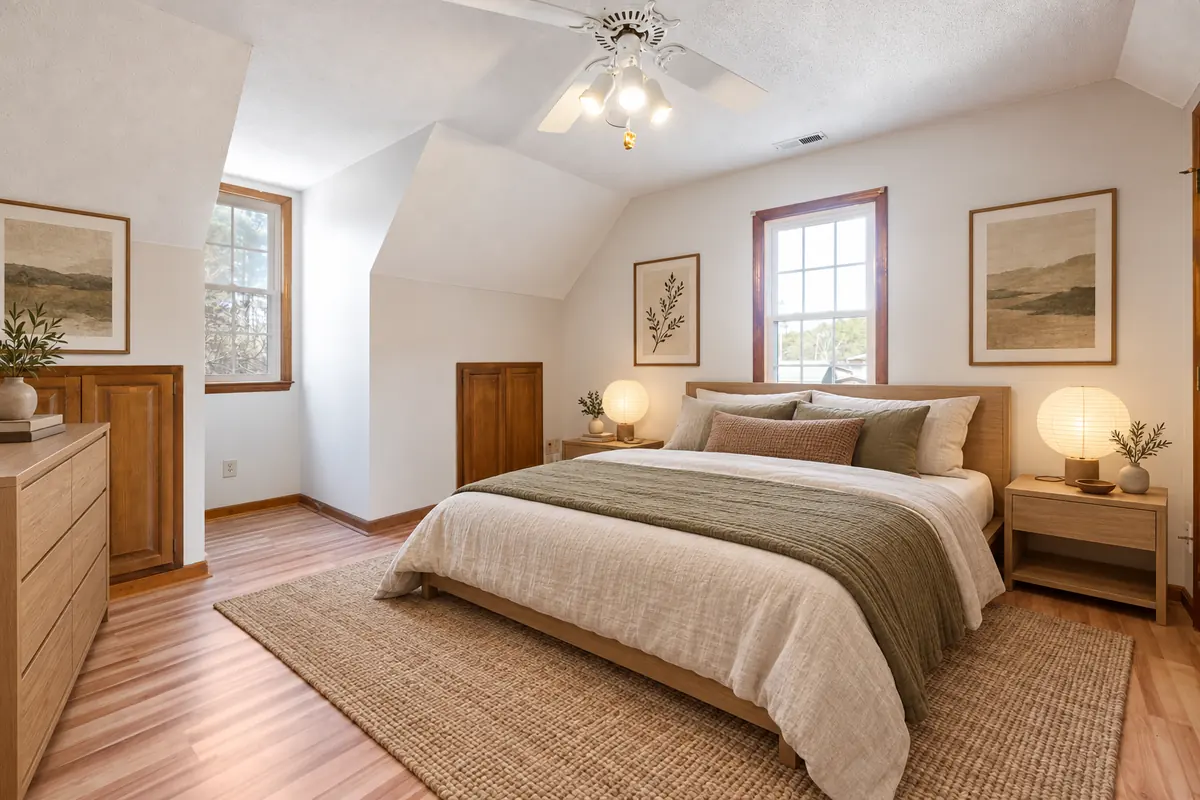 How to virtually stage small rooms
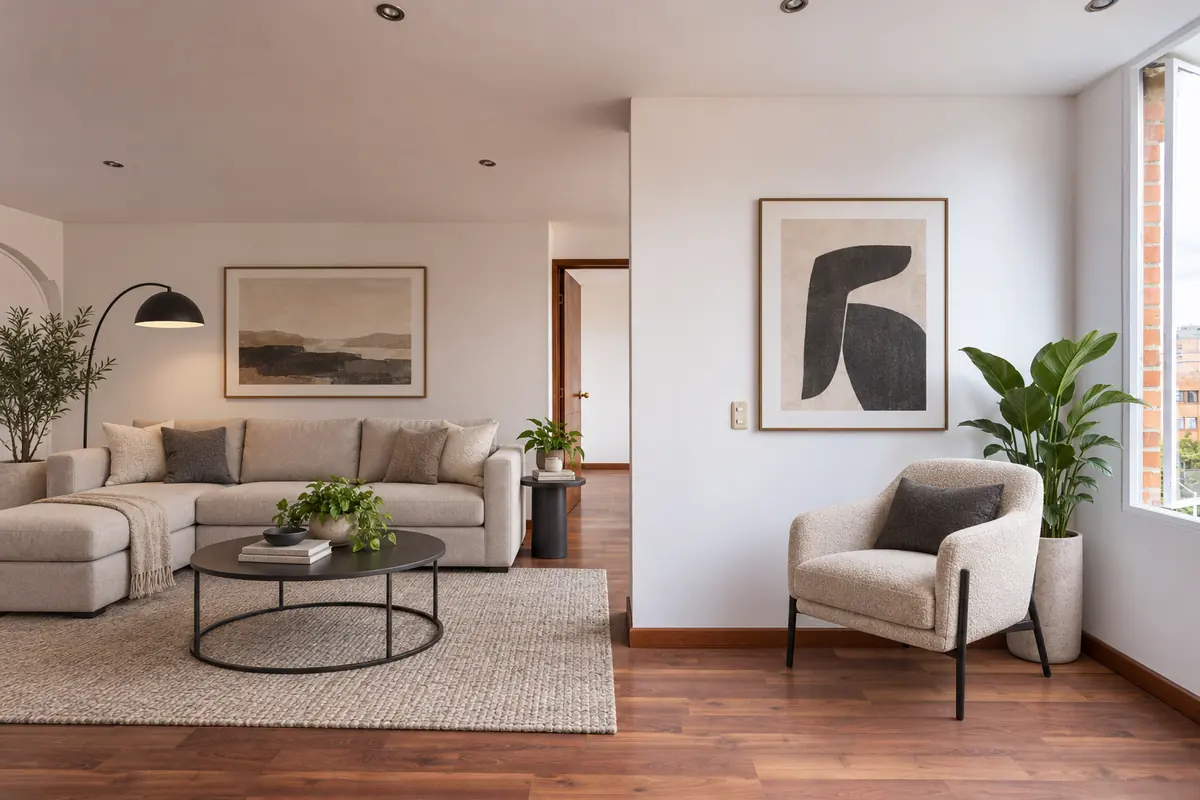 How to virtually stage a listing, step by step